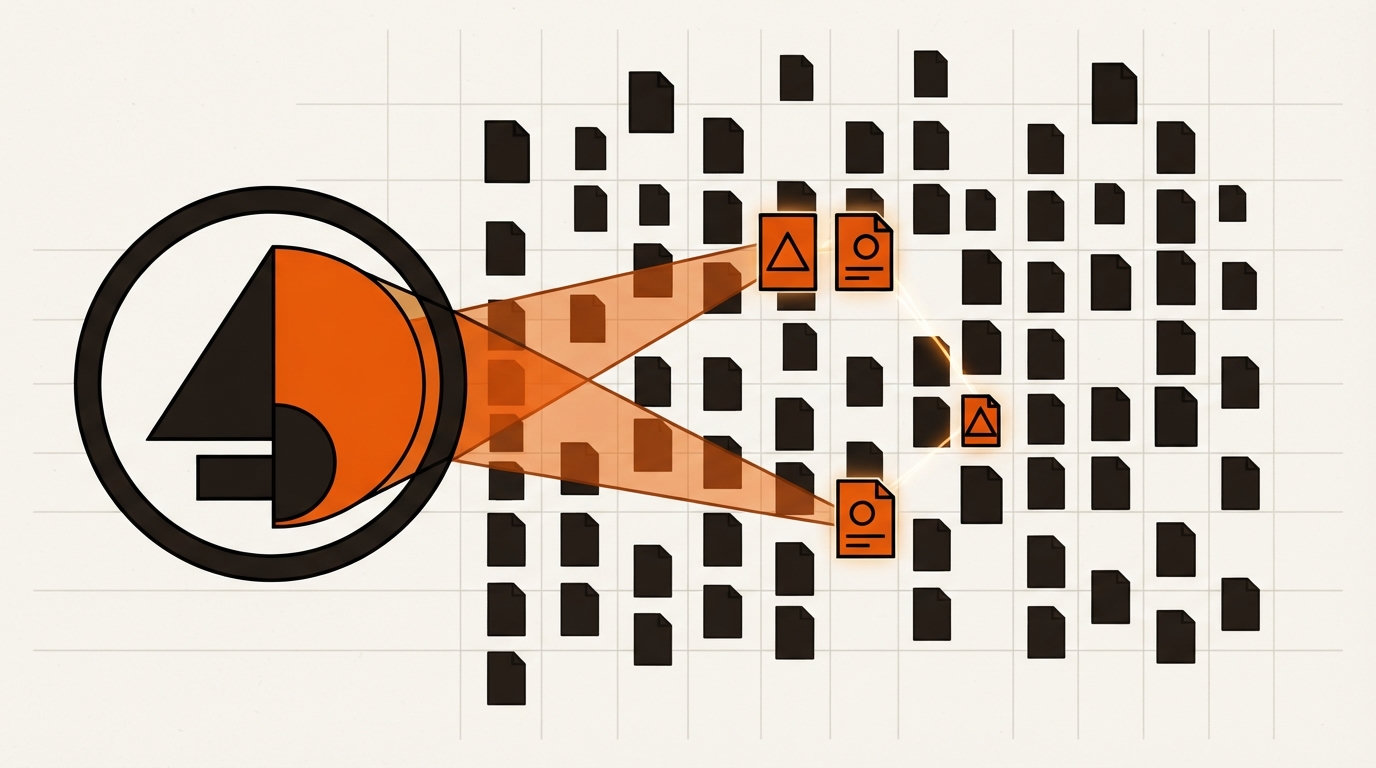
"RAG" — retrieval-augmented generation — has become shorthand for "the agent looks something up before answering." But there are two structurally different ways to build that lookup, and enterprise teams increasingly need both. Understanding the difference is a five-minute conversation that can save months of rework.
Definition
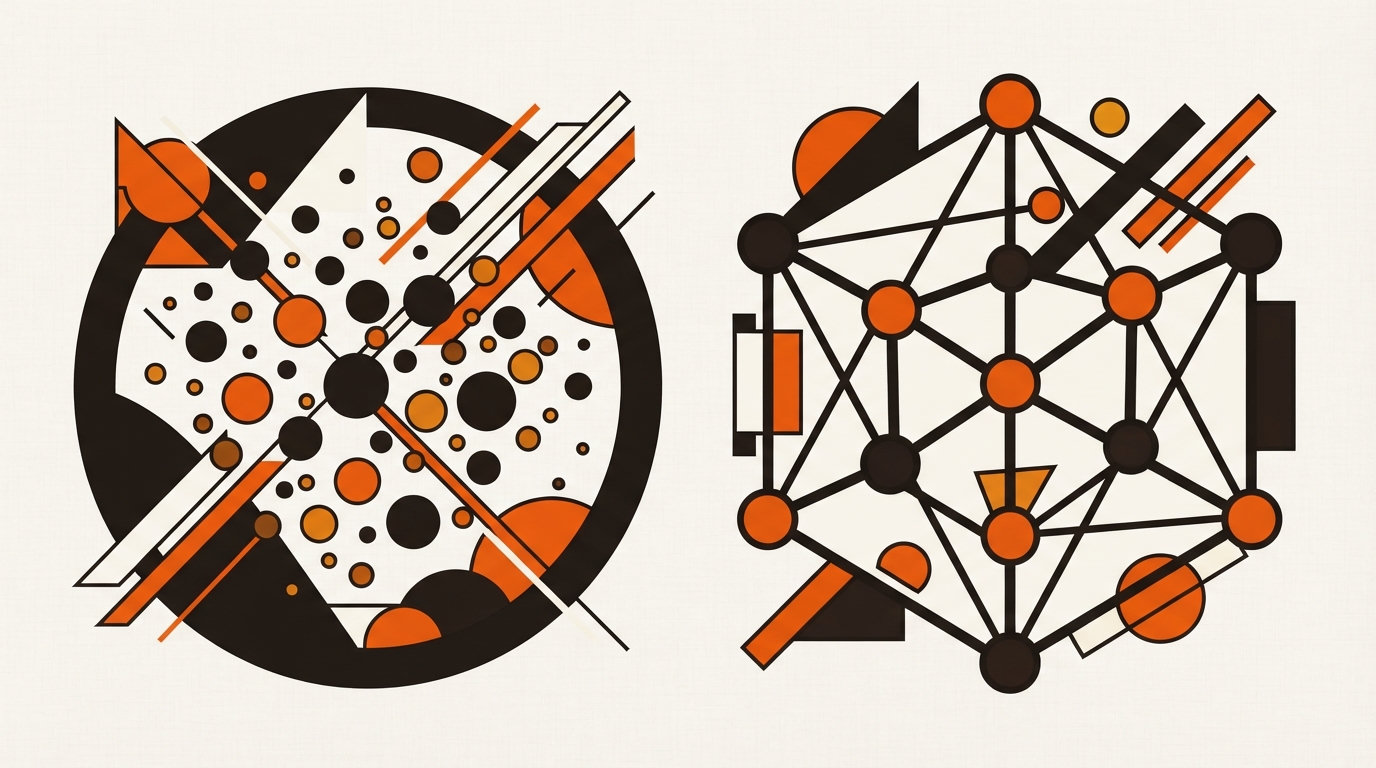
Vector RAG retrieves documents or passages that are semantically similar to a query. Graph RAG retrieves facts by traversing explicit, structured relationships between entities — this person reports to that manager, this product depends on that supplier, this clause references that policy.
The core difference: similarity vs. structure
Vector search is excellent at "find me things like this." Ask "what's our refund policy for damaged goods?" and it will surface the passages whose meaning is closest to the question — even if worded completely differently in the source document. What it's structurally weak at is multi-hop reasoning across explicit relationships: "which suppliers feed the product line that our top three at-risk enterprise accounts depend on?" That question isn't about semantic similarity at all — it's about traversing a chain of real relationships, and a graph is built exactly for that.
| Dimension | Vector RAG | Graph RAG |
|---|---|---|
| Best at | Semantic similarity — "find things like this" | Multi-hop relationships — "trace the connections" |
| Data shape | Unstructured text, documents, tickets, transcripts | Structured entities and explicit relationships |
| Typical question | "What does our policy say about X?" | "Which accounts are exposed if supplier Y fails?" |
| Explainability | Retrieved passages, but relationships stay implicit | An explicit, traceable reasoning path |
| Setup cost | Lower — embed and index existing documents | Higher — requires curated entities and relationships |
| Maintenance | Re-embed as content changes | Keep the graph schema and relationships current |
Vector search answers "what does this sound like?" A graph answers "how does this connect to that?" Most serious enterprise use cases eventually need both answers.
When to reach for each — a practical guide
Choose vector RAG when your knowledge is mostly unstructured
Policy documents, support tickets, contracts, product manuals, meeting notes. If the value is in the prose itself, vector search is the faster, cheaper starting point.
Choose graph RAG when the value is in the connections
Org charts, supply chains, compliance dependency chains, customer entitlement hierarchies. If the answer requires "and then, and then, and then" reasoning across entities, a graph will out-perform pure similarity search.
Combine them for the hardest enterprise questions
A common production pattern: use the graph to identify the relevant entities and scope, then use vector search within that scope to retrieve the specific supporting passages — getting structure and nuance in a single answer.
The executive question that actually matters
Don't ask "should we use vector or graph RAG" as an abstract technology choice. Ask: "What kind of question do we most need this agent to get right?" If it's grounding conversational answers in your documentation, start with vector search — it's faster to stand up and covers the majority of enterprise knowledge-lookup needs. If the agent needs to reason across how your business is actually structured — dependencies, hierarchies, chains of consequence — budget for the additional investment a graph requires. Most mature enterprise deployments end up with both, layered rather than competing.
Key takeaways
- Vector RAG finds similar meaning; graph RAG traces explicit relationships — they solve different problems.
- Vector RAG is cheaper to start with; graph RAG requires curated structure but wins at multi-hop reasoning.
- The right question isn't "which technology" — it's "what kind of question must the agent answer correctly?"
- Mature systems typically combine both rather than choosing one permanently.
Not sure which retrieval architecture fits your data?
We help teams map their knowledge landscape and choose — or combine — the right retrieval approach.