"Human-in-the-loop" gets treated as a hedge — something you add because you don't fully trust the AI yet. That framing undersells it. In production agentic systems, a well-placed human checkpoint is a design decision that determines how much autonomy you can safely grant everywhere else.
Definition
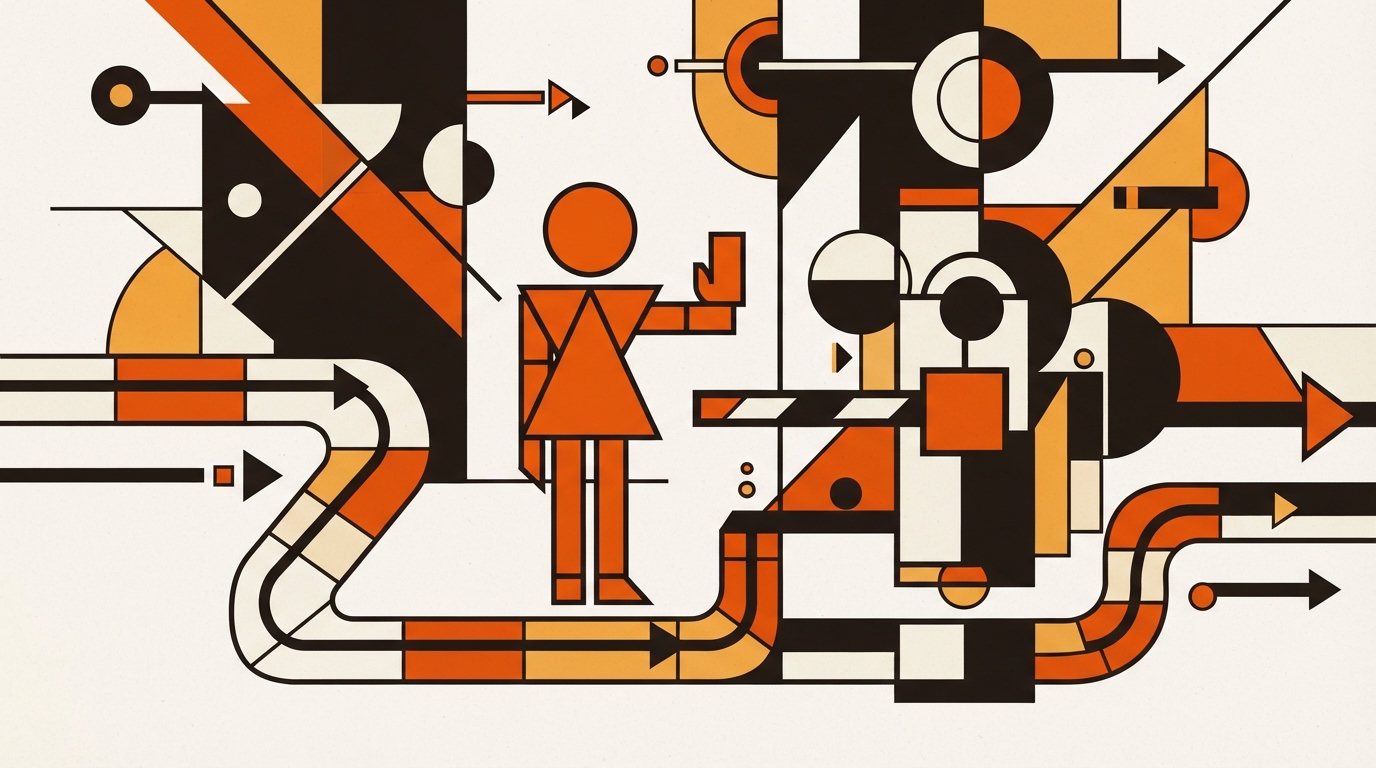
Human-in-the-loop (HITL) is a workflow design pattern where an agent pauses before, during, or after taking a consequential action, and a person reviews, approves, edits, or overrides it before the workflow continues.
Three places a checkpoint can live
Pre-approval — before the action executes
The agent drafts a decision (a refund, a contract clause, an email to a client) and a person approves it before anything happens externally. Highest safety, highest human time cost — reserved for high-stakes or irreversible actions.
In-flight review — the agent acts, flags, and pauses
The agent proceeds automatically on routine cases but escalates specific ones — unusual amounts, low model confidence, first-time scenarios — to a person mid-workflow, based on rules you define upfront.
Post-hoc audit — the agent acts, a person spot-checks after
Used for lower-stakes, reversible, high-volume actions where blocking on human review isn't practical. Trust is built and monitored through sampling and audit trails rather than gating every action.
The goal of human-in-the-loop is not to slow the agent down forever. It's to earn the evidence that lets you move the checkpoint later — or remove it — as the system proves itself.
Deciding where the checkpoint belongs
Three questions consistently separate the workflows that need a tight human checkpoint from the ones that don't:
- Is the action reversible? A draft email is trivially reversible. A wire transfer, a shipped refund, or a legal commitment is not — irreversibility raises the bar for pre-approval.
- What's the blast radius of a mistake? An internal summary that's slightly wrong costs a few minutes. A customer-facing commitment that's wrong costs trust, and sometimes money or compliance exposure.
- How confident is the agent, and how novel is the situation? Well-trodden, high-confidence cases are strong candidates for automation; edge cases and low-confidence outputs are exactly where a human check earns its cost.
Why this matters for enterprise rollouts specifically
Enterprises rarely fail at agentic AI because the model was wrong. They fail because they granted full autonomy on day one, had one bad high-visibility incident, and lost executive sponsorship for the whole program. A staged human-in-the-loop design — tight checkpoints at launch, loosened deliberately as the agent proves itself on real volume — is how you avoid that outcome while still getting to meaningful automation. It's also the mechanism by which guardrails and tool-level permissions earn the confidence to expand over time, instead of staying frozen out of caution.
The practical test
If you can't clearly name who reviews an agent's action, when, and what happens if they say no — you don't have a human-in-the-loop design yet. You have a hope.
Key takeaways
- HITL is a design pattern for building trust, not a permanent admission that the AI can't be trusted.
- Checkpoints can sit before, during, or after an action — choose based on reversibility, blast radius, and confidence.
- Stage autonomy: start tight, loosen deliberately as the system proves itself on real volume.
- If you can't name who reviews what and when, the design isn't finished yet.
Rolling out an agent that touches real business decisions?
We help teams design the checkpoints that make expanding autonomy safe over time.